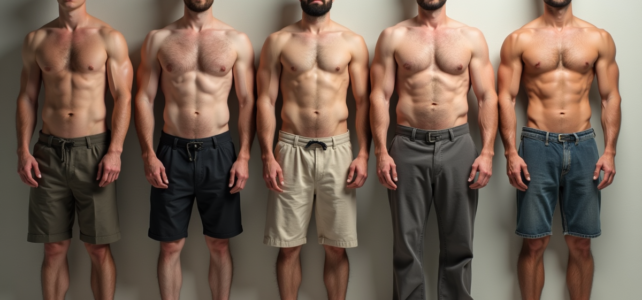
The standards of male beauty have undergone significant transformations over the decades. In the 1950s, the archetype of the attractive man was often associated with figures like Marlon Brando, characterized by a robust and virile appearance. The 1980s introduced the cult of the sculpted body, popularized by icons such as Arnold Schwarzenegger.
In 2024, expectations seem to be diversifying even further. Social media and self-acceptance movements are redefining beauty criteria, valuing body diversity and authenticity. Men from all backgrounds are encouraged to embrace their individuality, marking a break from the rigid standards of the past.
Historical Evolution of Male Body Standards
The standards of male beauty have evolved over the centuries, influenced by cultural, social, economic, and artistic factors. In ancient Greece, the ideal male body was that of an athlete with divine proportions, often represented by sculptures like the Discobolus or statues of gods such as Zeus and Apollo. During the Middle Ages, male beauty standards shifted away from a focus on physical appearance to emphasize spiritual beauty.
The Renaissance marked a return to the ideals of antiquity with a renewed appreciation for the male body, influenced by humanism and anatomical studies. From the Elizabethan era until the end of the 19th century, male beauty standards varied according to social classes and artistic movements.
In the 20th century, the advent of cinema radically transformed ideals of male beauty. Hollywood popularized a slim and agile body, embodied by figures like Cary Grant and James Stewart. The 1980s saw a glorification of bulky muscles and physical strength, particularly through icons like Arnold Schwarzenegger.
- Ancient Greece: athletic body and divine proportions.
- Middle Ages: emphasis on spiritual beauty.
- Renaissance: return to ancient ideals, appreciation for the male body.
- 20th century: influence of Hollywood, glorification of muscles.
In the 2010s, the concept of ‘dad-bod’ emerged, valuing a more natural appearance that is less demanding in terms of muscles and fitness. This evolution occurs in a context where the average size of men in France is also changing, influenced by factors such as nutrition and lifestyle. 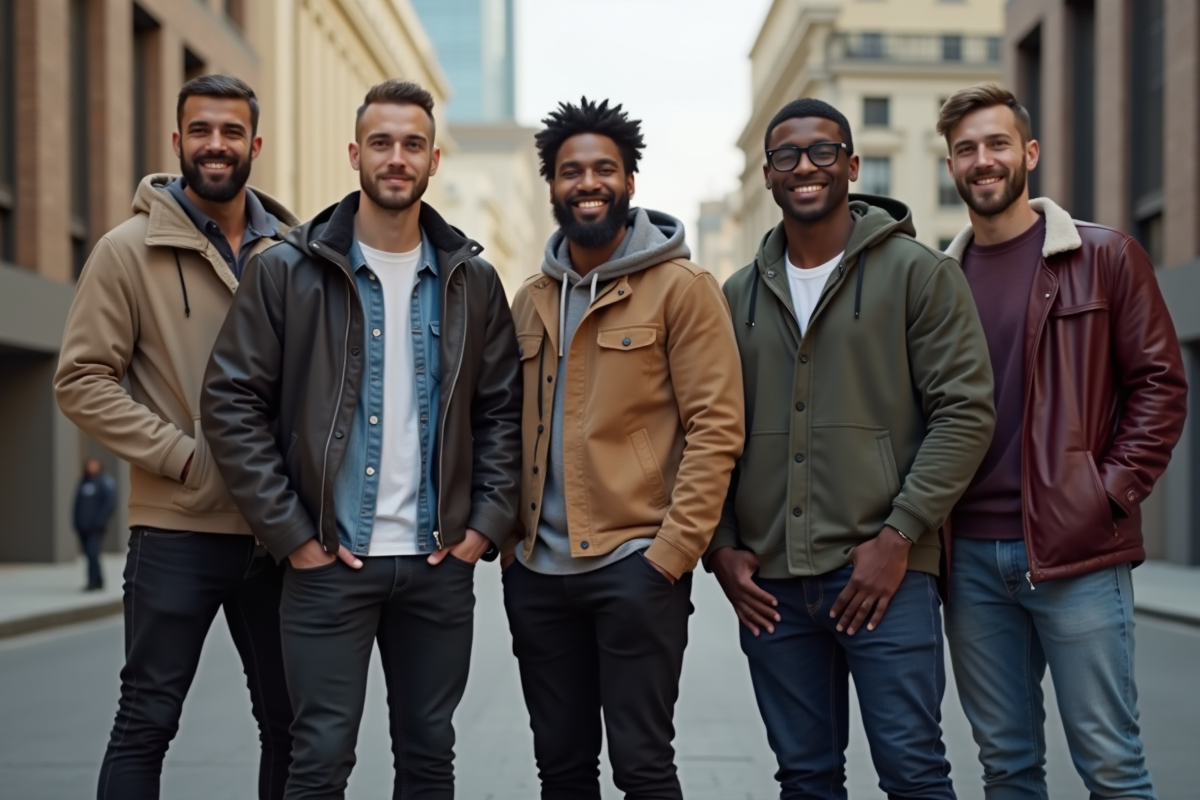
Perspectives and Trends for 2024
In 2024, male body standards are trending towards a redefinition influenced by concerns for mental and physical health. The weight of traditional stereotypes is diminishing, making way for a diversity of body models that are more inclusive and realistic. This transformation is supported by academic and social initiatives.
Gilles Tremblay, a retired professor from Laval University and head of the research team Masculinities and Society, emphasizes the importance of more nuanced media education. This approach aims to deconstruct gender stereotypes and promote varied representations of masculinity.
- Mental health: increased consideration of men’s psychological needs.
- Media education: awareness of the impacts of body images conveyed by the media.
- Gender stereotypes: critique and reduction of restrictive norms.
Mickaël Carlier, co-founder of the organization Men Who Change, highlights initiatives aimed at promoting positive masculinities. This Quebec platform works towards redefining male roles based on testimonials and academic research.
The journalist and author Mickaël Bergeron, in his book ‘Cocorico, guys we need to talk’, addresses contemporary issues of masculinities. He advocates for a collective awareness regarding the social pressures placed on men concerning body standards.
The reflection on male beauty standards for 2024 also aligns with the work of Pierre Bourdieu in ‘Masculine Domination’. Bourdieu analyzes how social and cultural structures perpetuate specific expectations of men, often to the detriment of their overall well-being.