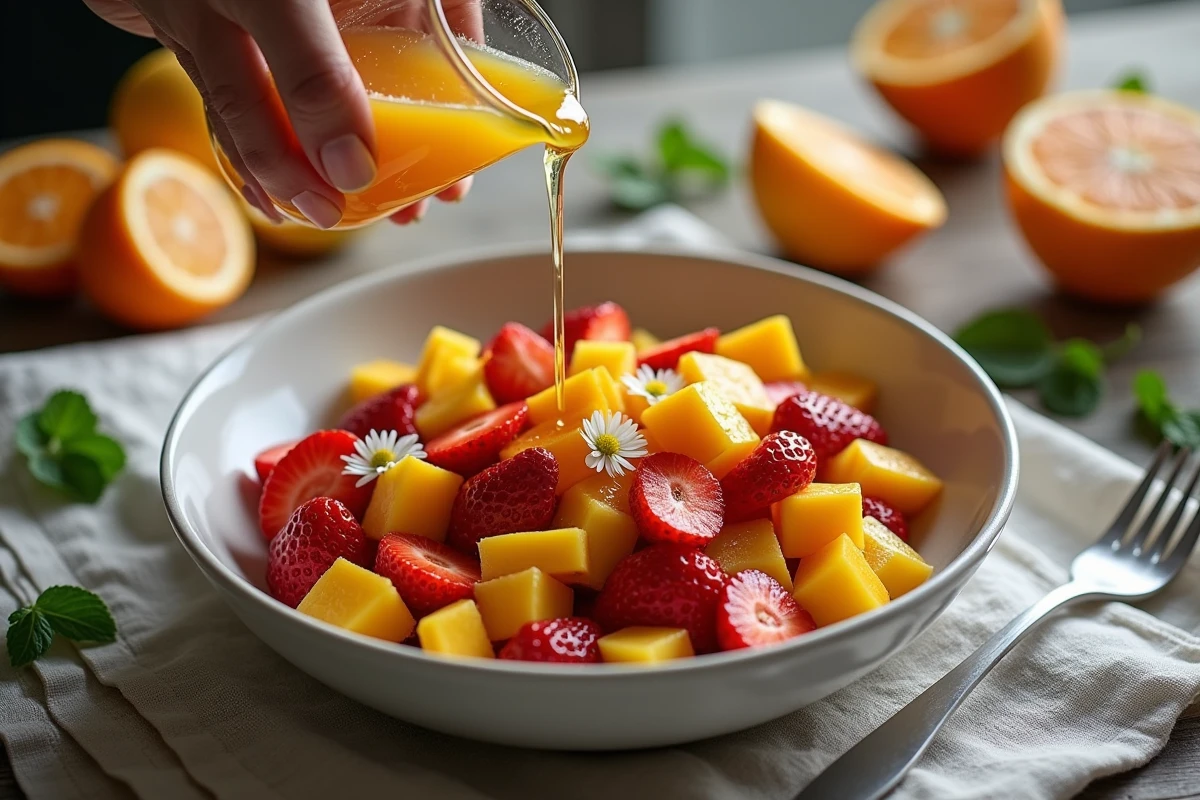
A carefully cut fruit salad served without liquid is a dessert that oxidizes quickly and lacks binding. The choice of liquid changes the texture, the sweet-sour balance, and even the shelf life in the refrigerator. Citrus juice, cold infusion, light syrup, or flavored alcohol: each option steers the taste in a different direction, and some combinations work much better than others.
Cold infusions and iced teas: the base liquid that few recipes exploit
You may have noticed that fruit salad recipes almost always suggest orange juice or syrup? There is a more subtle alternative. For a few years now, French pastry chefs have been using teas and cold infusions as a base liquid for their fruit salads.
A chilled jasmine green tea brings a subtle floral bitterness that enhances summer fruits like peach or nectarine. A lemon verbena infusion extends the freshness of citrus without adding sugar. Vanilla rooibos works very well with autumn fruits (pear, fig, grape).
The method is simple: prepare a concentrated infusion, let it cool completely, then pour it over your cut fruits. Count about one glass of infusion for four servings. The liquid should coat the fruits without drowning them. If you’re looking for what liquid to put in a fruit salad on a daily basis, a cold infusion offers a light result with no added sugar.
Fresh citrus juice: dosage and acidity for a balanced fruit salad
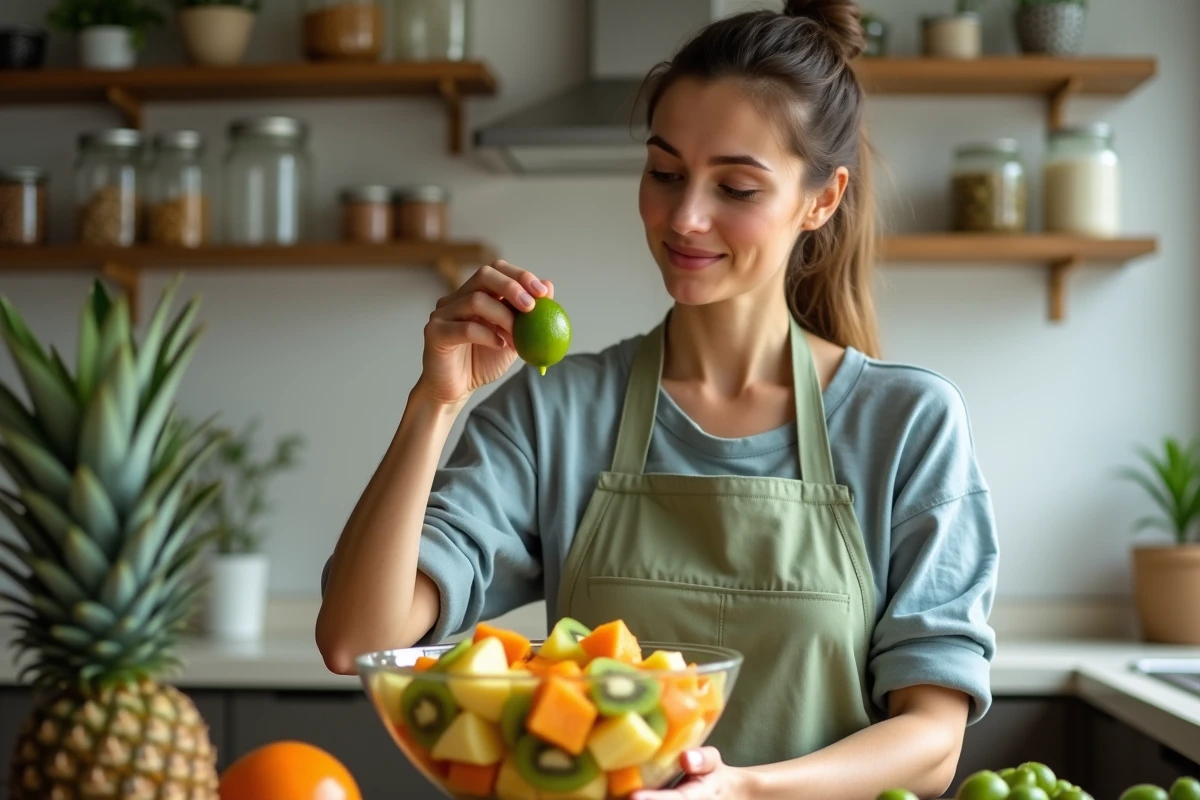
Lemon juice remains the most common reflex, and for good reason: its acidity slows down the oxidation of fruits that brown quickly (apple, banana, pear). A drizzle is enough to protect the color for several hours in the refrigerator.
Lemon alone can dominate the flavors. For a rounder result, mix it with freshly squeezed orange juice. Two-thirds orange to one-third lemon provides a reliable sweet-sour balance. Pink grapefruit juice also works, with a slight bitterness that enhances red fruits well.
Single-origin juices: a path to explore
French supermarkets are increasingly offering “single-origin” juices without concentrate: Sicilian orange, Costa Rican pineapple, Indian mango. These juices have a more pronounced aromatic profile than a classic mixed fruit juice. Used pure or mixed with a splash of lime juice, a single-origin mango juice transforms a simple fruit salad into an exotic dessert with no extra effort.
Syrups and added sugar: where to place the cursor in your recipe
Grenadine, mint, or cane syrups are the classics of family fruit salads. The problem is the amount of sugar they bring. Recommendations from ADEME and UFC-Que Choisir have highlighted the importance of limiting very sweet syrups in favor of unsweetened juices or hydrosols in preparations like fruit salads.
If you insist on syrup, use it sparingly. A tablespoon of agave syrup or liquid honey diluted in a little warm water is enough for four people. Homemade syrup (water, sugar, lemon zest, or vanilla pod) allows for precise control of sweetness.
Hydrosols: orange blossom and rose water
Orange blossom water and rose water are not syrups. They are hydrosols, virtually sugar-free, that intensely flavor with just a few drops. Their use is common in Eastern pastries but works wonderfully in a fruit salad.
- Orange blossom pairs well with strawberries, raspberries, and citrus. Two to three teaspoons for a family-sized bowl.
- Rose water pairs better with white-fleshed fruits (lychee, white peach, pear) and exotic fruits.
- The dosage remains discreet: too much hydrosol gives a soapy taste. Taste before adding more.
Alcohol and fruit salad: rum, port, and flavored alternatives
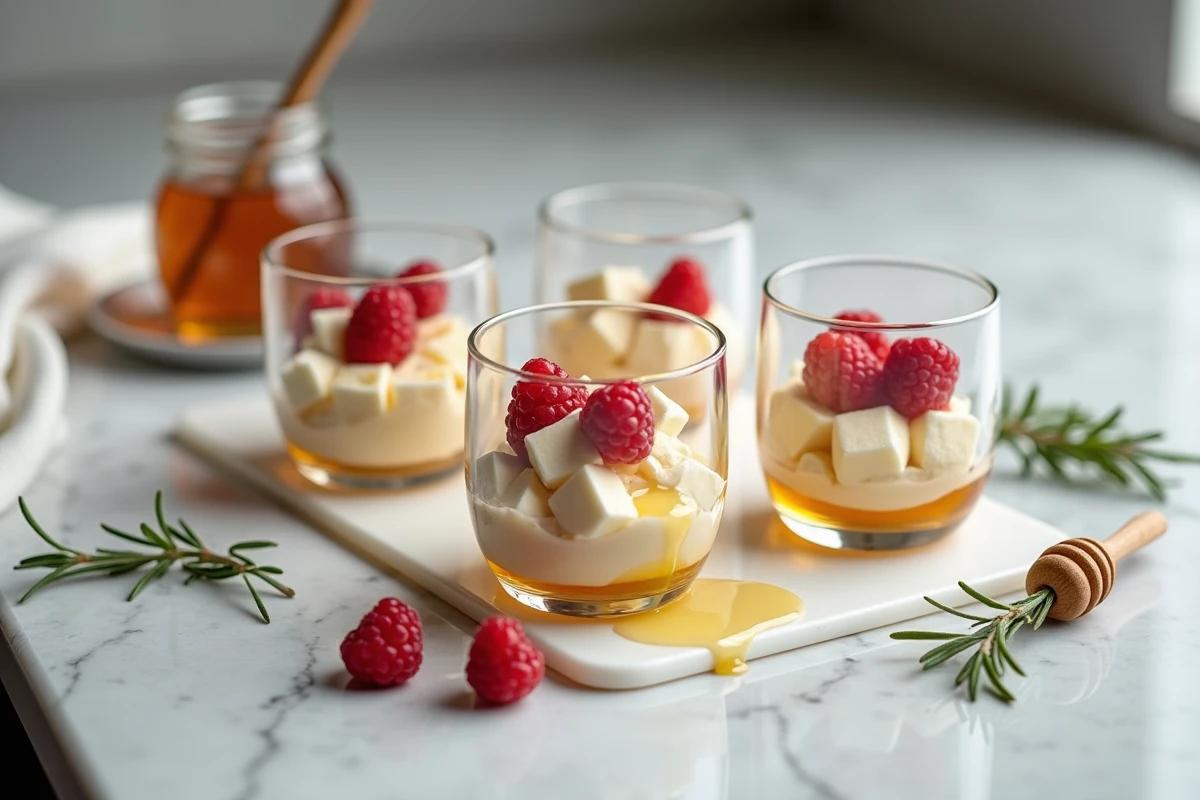
A splash of amber rum in a fruit salad is a classic that works especially well with tropical fruits (pineapple, mango, banana). Port, on the other hand, adds a sweet roundness and notes of candied fruit that are better suited to autumn or winter salads with grape, fig, or pear.
Alcohol should always be added in small quantities, just before serving. A tablespoon per person is sufficient. Added too early, it softens the fruits and crushes the fresh aromas.
For tables where alcohol is not desired, a diluted liquid vanilla extract in fruit juice produces a comparable effect in terms of aromatic depth. Star anise infused in a light syrup and then cooled also offers a warm touch without alcohol.
Combining liquids: three combinations that change the dessert
One liquid may be enough, but the combination of two complementary liquids often yields a better result. Here are three tested and effective combinations:
- Fresh orange juice, a splash of lime, and a few drops of orange blossom: the versatile combination that works all year round.
- Chilled jasmine green tea, a spoonful of honey, and chopped mint: ideal with summer fruits (melon, peach, apricot).
- Light homemade vanilla syrup, mango juice, and a hint of lemon: for an exotic fruit salad with pineapple, passion fruit, and lychee.
In each case, add the liquid at least thirty minutes before serving. This resting time allows the flavors to blend and the fruits to absorb the aroma of the mixture. Cover the bowl and place it in the refrigerator. The cold concentrates the aromas and makes the tasting more enjoyable.
The chosen liquid depends on the fruits, the season, and the desired level of sweetness. A winter citrus fruit salad does not need the same accompaniment as a summer version with red fruits. Adapt the liquid to the main fruit of the bowl, not the other way around, and the result will always be more coherent.