
Finding an activity that appeals to children, teenagers, and adults alike can sometimes be a puzzle. Classic pastimes retain their charm, but new forms of entertainment are transforming how we spend our free time. Immersive leisure activities, inclusive workshops, cooperative games: the possibilities are expanding well beyond the usual outings.
Immersive virtual reality leisure: an urban activity accessible to all
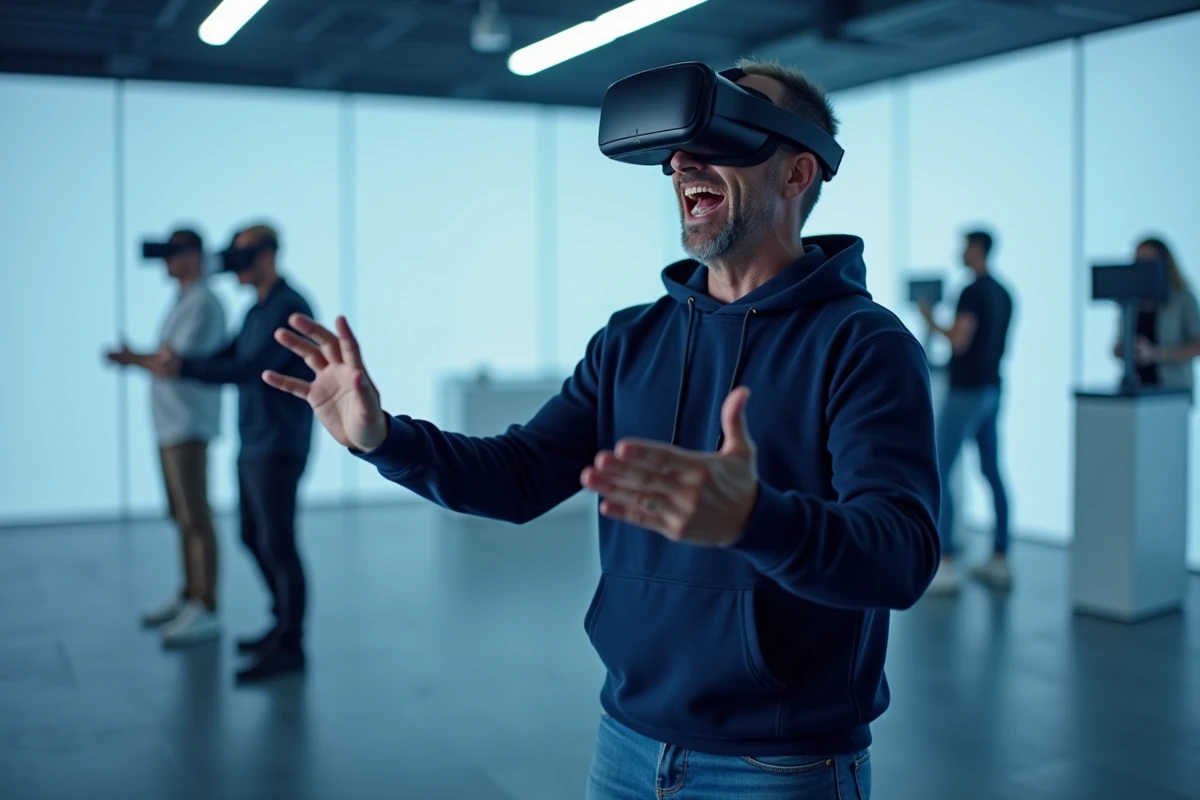
Have you ever put on a virtual reality headset? While the image of a solitary gamer in front of a screen persists, the reality on the ground is quite different. VR rooms now welcome families, groups of seniors, and teams for team building, with no technical prerequisites.
The principle is simple: you book a session, a game master explains how it works, and the experience begins. Cooperative VR escape games, immersive tours of a reconstructed museum, sports simulations: each session lasts between thirty minutes and an hour, making it a flexible format for an outing with friends or family.
What sets these experiences apart from classic leisure activities is the sensory engagement. You’re not just looking at a screen; you’re moving through an environment. People who are not tech-savvy adapt quickly thanks to on-site support. To explore other entertainment options suitable for all profiles, the leisure activities offered by IdentiTools cover a wide range of formats, from physical games to creative activities.
Creative workshops and cooperative games: stimulating creativity without competition
Competition motivates some people, but it holds back others. Cooperative games reverse the logic: the whole group wins or loses together. This mechanism changes the atmosphere of an evening or workshop.
Hands-on workshops for all ages
Modeling, ceramics, punch needle, textile upcycling: these hands-on activities require neither artistic talent nor expensive materials. A pottery workshop, for example, is suitable for both a seven-year-old child and an adult who has never touched clay.
The creative workshop acts as a decompression chamber. You focus on a gesture and forget the rest. Group formats add a social dimension that is often lacking in solitary digital leisure activities.
Cooperative board games and group facilitation
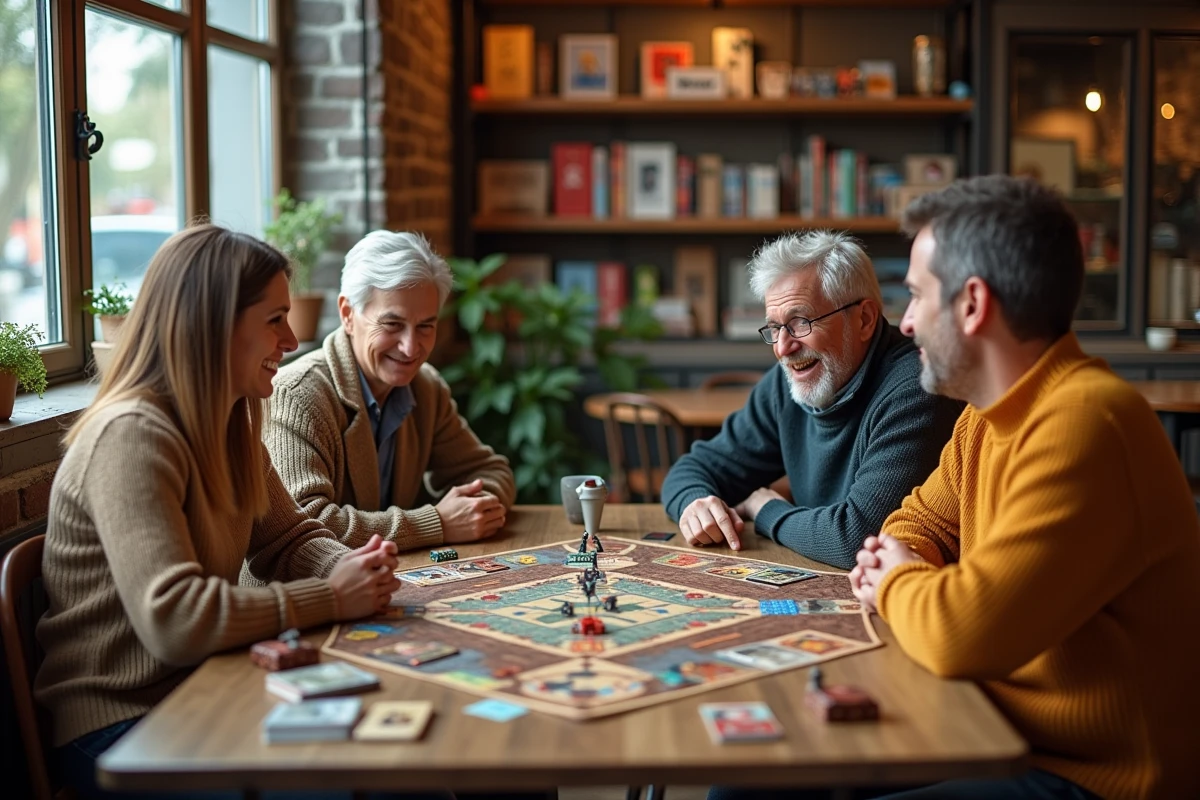
Cooperative board games have far surpassed the circle of enthusiasts. Their principle (solving a problem together within a limited time) adapts well to both a night out with friends and a corporate event.
Here’s what makes a cooperative game effective for a mixed group:
- Rules that can be explained in under five minutes, to avoid excluding casual players
- An active role for each person on every turn, with no downtime
- Adjustable difficulty that allows for replayability without fatigue
A good cooperative game creates more shared memories than a passive outing. This explains their growing success in team building activities and family vacations.
Inclusive leisure activities: activities designed for everyone
Accessibility is not just about a ramp. Since the Disability Act of 2005 and the scheduled accessibility agendas, the leisure sector in France has been designing activities adapted to sensory, motor, and cognitive disabilities.
In practice, this takes various forms:
- Sensory pathways with tactile and auditory supports in museums and amusement parks
- Creative workshops with ergonomic tools and simplified visual instructions
- Virtual reality sessions with adjustable parameters (speed, brightness, sound)
An inclusive leisure activity does not mean a second-rate leisure activity. Feedback from organizations that have adopted this approach shows that adaptations benefit all participants, including those who did not seem to need them initially. An enriched sensory pathway interests both a neurotypical child and an autistic child.
Are you looking for a family outing that suits a relative with reduced mobility? Check if the venue has an accessibility label. Certified organizations detail their facilities on their website, which avoids unpleasant surprises on the day.
Multi-sensory experiences: leisure that goes beyond mere entertainment
“Experience rooms” represent a leisure format still underrepresented in traditional guides. The principle: a room where light, sound, textures, and sometimes smells are orchestrated to create a narrative environment.
It’s neither an escape game, nor a show, nor an exhibition. The multi-sensory experience places the visitor at the center of a universe without asking them to solve a puzzle or follow a marked path. You wander, touch, and listen.
This format attracts an audience that does not find satisfaction in high-adrenaline leisure activities. No timer, no ranking. The session is experienced at one’s own pace, making it suitable for both children and the elderly. Major French cities are seeing these spaces multiply, often in former industrial sites that have been repurposed.
Choosing an innovative leisure activity suitable for your group
Before booking an activity, one question deserves to be asked: who is participating? A leisure activity suitable for a group of sporty friends may not be appropriate for an outing with young children or grandparents.
The right leisure activity is one that includes the whole group without frustrating anyone. To achieve this, three criteria help filter options: the physical level required, the duration of the activity, and the possibility of participating without prior experience.
Immersive leisure activities and creative workshops often tick these three boxes. They require neither specific physical condition nor technical skill. Their short format (an hour on average) fits well with the tight schedules of vacations or weekends. The real novelty is that these activities now exist outside major metropolitan areas, in medium-sized cities where the leisure offerings are rapidly diversifying.