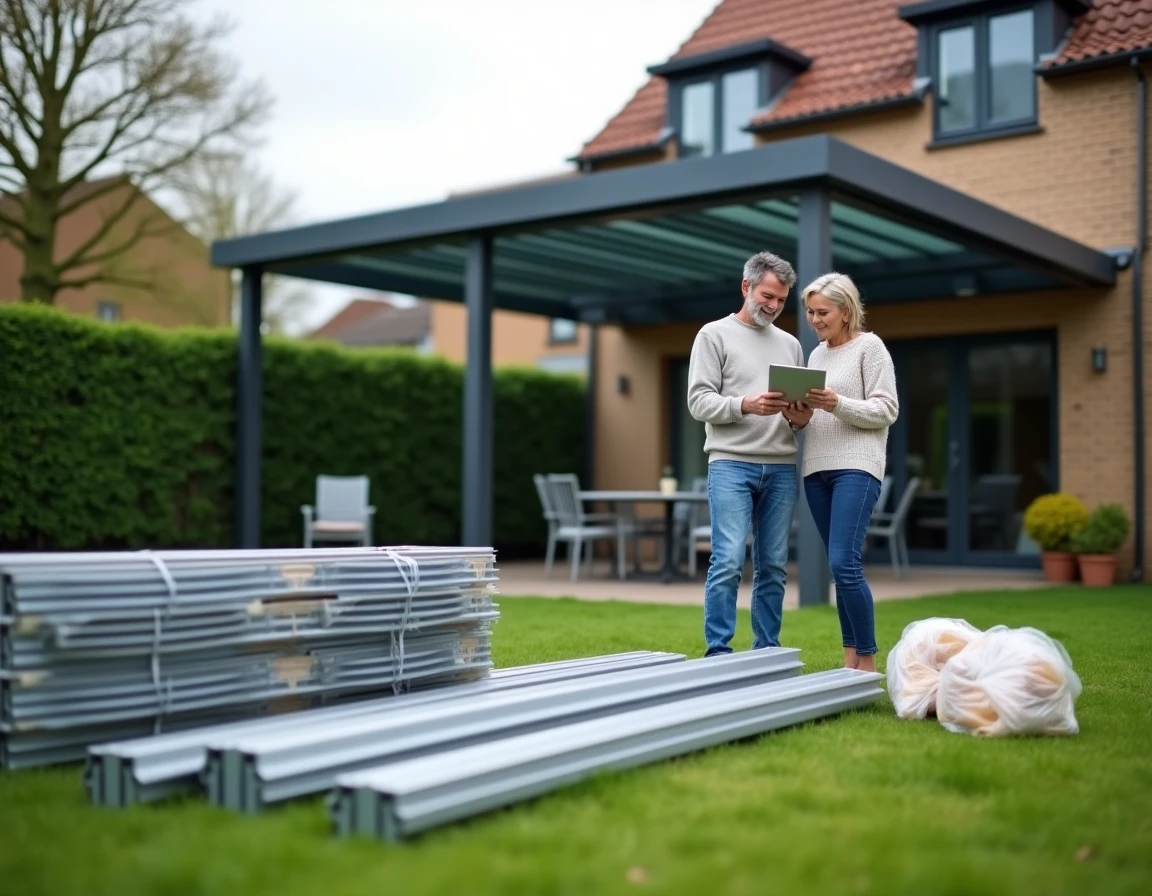
The price of a DIY conservatory varies from simple to triple depending on the material, surface area, and type of glazing. Comparing gross rates per square meter is not enough: additional costs (slab, ventilation, waterproofing) can sometimes weigh as much as the structure itself. This article details the actual cost differences and the technical points that determine the ease of installation.
Price difference between existing slab and support creation
Installation guides focus on assembling the kit. The real complexity factor lies upstream: the condition of the ground. An existing concrete slab, flat, with reservations for rainwater drainage, reduces the project to a few days. Without this base, it is necessary to pour a slab, plan the drainage slopes, and sometimes create a peripheral wall.
This preparation cost can represent a significant portion of the total budget, sometimes comparable to the cost of the kit itself. The slab determines the actual difficulty of the installation, much more than the number of pieces to assemble.
If you are considering a purchase at a large DIY store, the price of a Brico Dépôt DIY conservatory provides a good overview of entry-level rates, but you must always add the cost of the support if it does not exist.
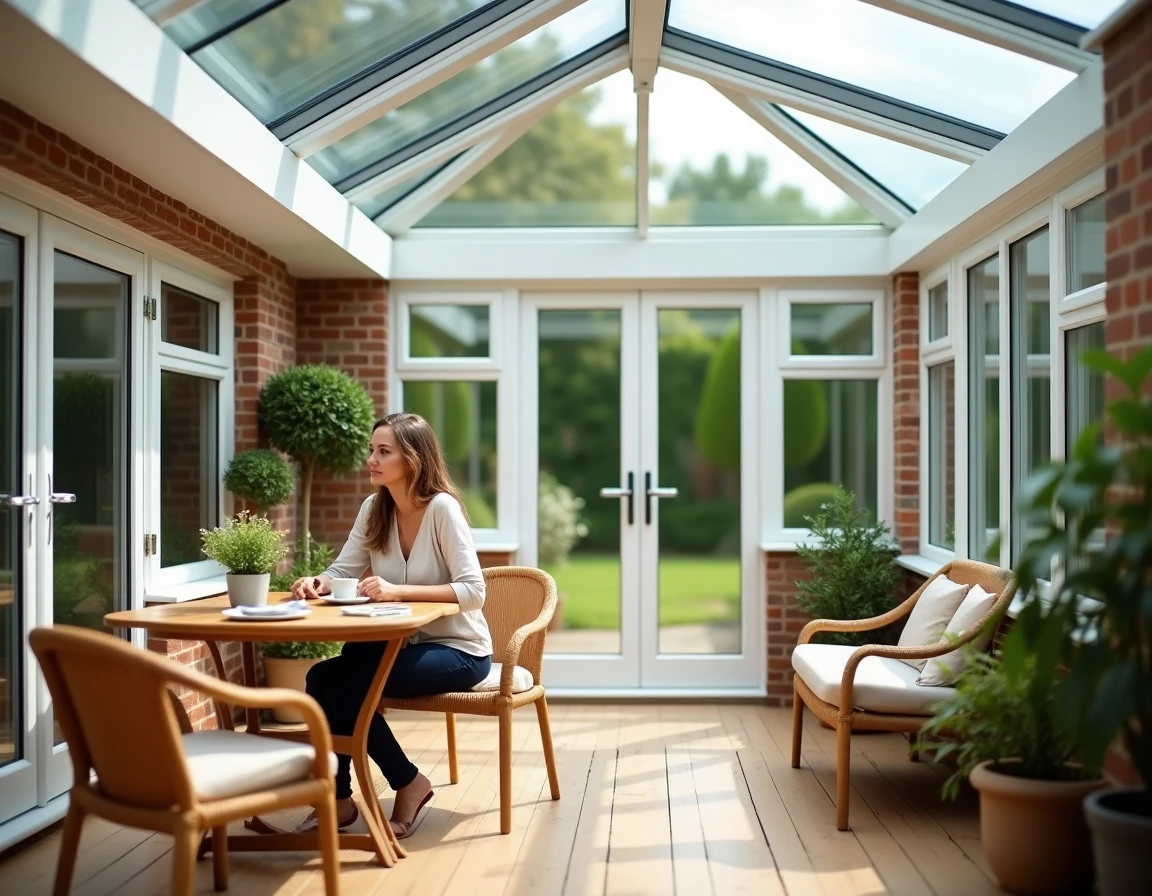
DIY conservatory: comparative table of average prices by type
Price differences depend on the structural material, type of roof, and level of finish. The table below summarizes the ranges based on available data.
| Type of DIY conservatory | Average price (structure only) |
|---|---|
| Polycarbonate (entry-level) | €3,000 |
| PVC | €7,500 |
| Wood frame | €4,500 |
| Aluminum | €8,000 |
| Flat roof | €9,000 |
| Custom-made | €9,500 |
| Bioclimatic | €8,500 |
Polycarbonate remains the cheapest material, but its thermal performance limits its use to a seasonal extension. Aluminum and flat roofs are in a range two to three times higher, with significantly better year-round comfort.
In price per square meter excluding installation, the data indicates a range from €150 to €1,000 per m² depending on the material and characteristics of the kit. Professional installation adds a cost between €300 and €800 per m².
Invisible options that inflate the budget of a DIY conservatory
The displayed price of the kit covers the structure, the roof, and sometimes the basic glazing. Comparisons often stop there. In practice, several additional costs transform the final quote.
- Ventilation (grilles, extractor) is rarely included in the kit, yet it conditions comfort in summer and the durability of the joinery against condensation.
- Solar protections (interior or exterior blinds, anti-UV films) represent an underestimated cost: without them, a south-facing conservatory becomes unusable for several months a year.
- Waterproofing finishes (specific silicone seals, wall connection flashings, counter-flashing) often require additional purchases and technical know-how to avoid leaks.
These invisible options can add several thousand euros to the initial budget. A €3,000 kit can easily double once these items are included.
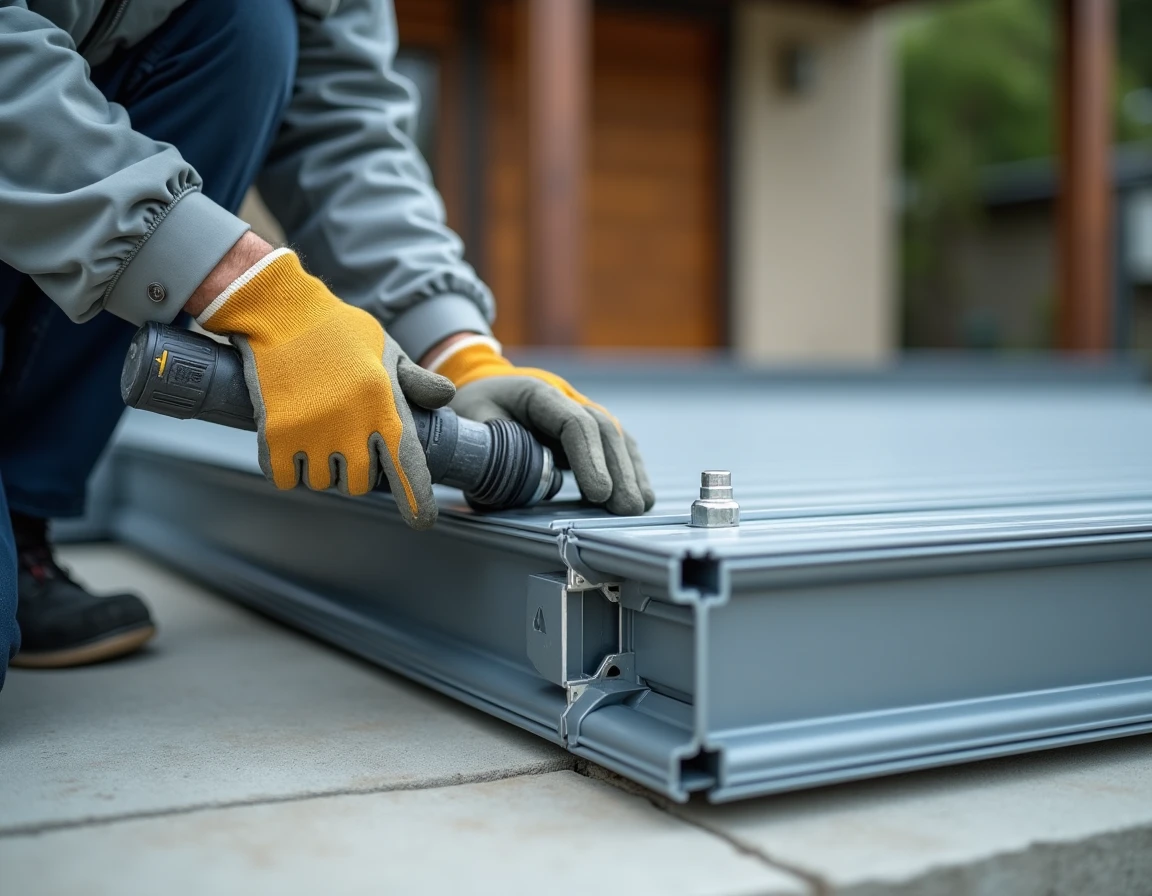
Insulating glazing and thermal bridge break
Recent catalogs of DIY conservatories increasingly highlight insulating double glazing and thermal break profiles. This evolution brings the kit closer to year-round use, but it significantly increases the cost of the structure compared to a basic polycarbonate kit.
An aluminum kit with high-performance glazing is positioned in the high range of the table. However, it eliminates the need to subsequently invest in supplementary heating or additional protections, which can rebalance the budget over several years.
Installation of a DIY conservatory: what makes installation truly easy
Manufacturers claim that installation is accessible to two people in one weekend. This estimate assumes several conditions are met.
- An existing concrete slab, level, with the required fixings or easily drillable.
- A healthy facade wall, without cracks or moisture issues, allowing for a watertight connection.
- Clear access for delivery (the packages of an aluminum DIY conservatory are long and heavy).
- Suitable tools: hammer drill, laser level, stable ladder, and adjustable torque screwdriver.
If any of these conditions are lacking, the project becomes complicated. The preparation of the ground is the primary difficulty, far ahead of the assembly of the structure itself. The elements arrive pre-drilled and pre-cut, which simplifies assembly, but precise leveling on an imperfect slab remains a delicate operation.
Professional installation or self-construction
The installation cost by a craftsman ranges from €300 to €800 per m² according to available sources. For a modest-sized project, self-construction allows for significant savings on the budget. For a larger conservatory or a custom kit, hiring an installer guarantees the watertightness and compliance of the whole, two points often underestimated by self-builders.
The choice between the two depends as much on the budget as on the condition of the existing support. On a ready slab, an experienced DIYer can manage a small PVC or polycarbonate kit alone. An aluminum kit with insulating glazing and a flat roof requires more precise installation.
The price of a DIY conservatory thus reads on three lines: the structure, the ground preparation, and the comfort options. Ignoring the last two skews any comparison. A low-cost kit without a slab or ventilation often costs as much as a better-equipped kit installed on an existing support.