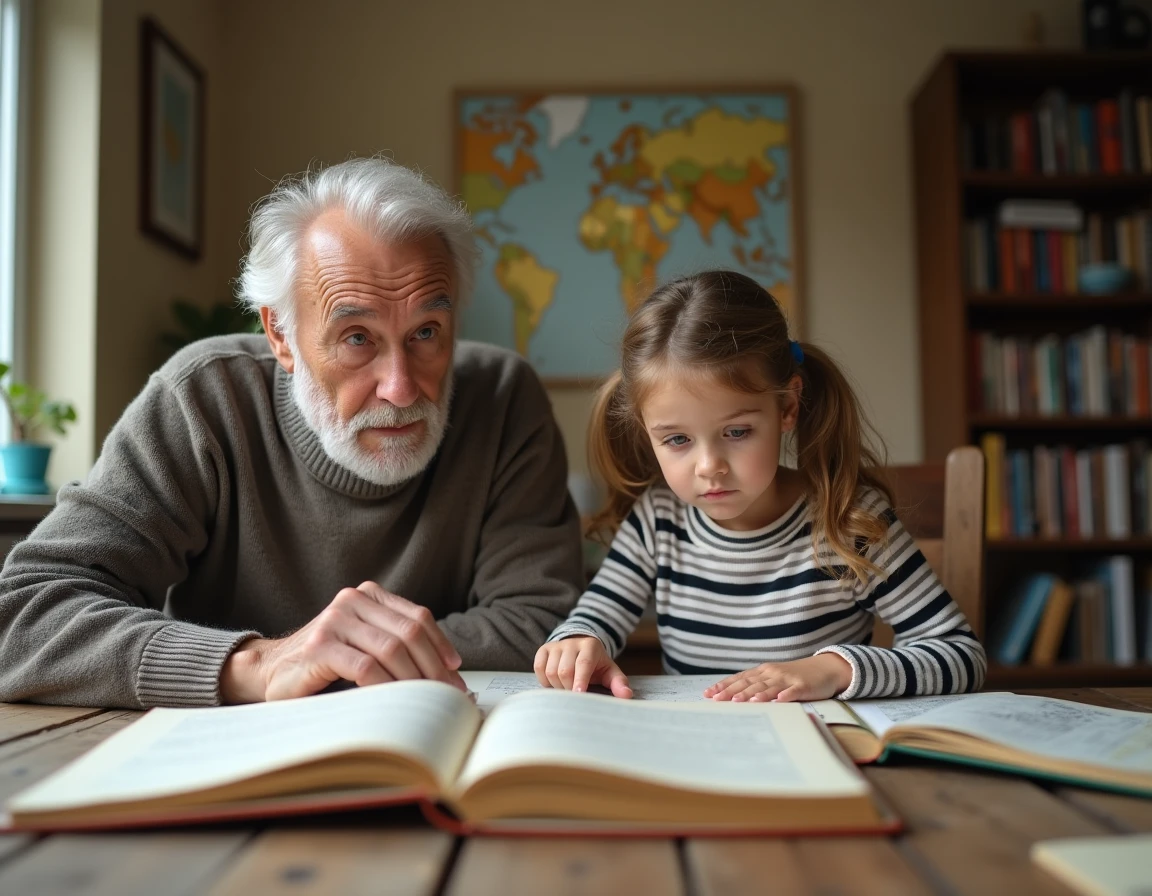
A child who listens to an anecdote about a clumsy king or an animal with absurd abilities often retains information better than after a traditional lesson. Fascinating stories act as a cement between generations: they inspire younger ones to ask questions and give adults the pleasure of rediscovering forgotten facts.
This blend of storytelling and knowledge, straddling the line between fiction and documentary, has gained new momentum in recent years thanks to podcasts, audiobooks, and narrative paths in museums.
Documentary Fictional Narratives: When Reality Becomes Captivating
You may have noticed that a child remembers the name of an explorer when told a shipwreck story, but forgets a date learned by heart? This is the principle of fictional documentary stories. They combine real facts (historical, scientific, geographical) with a narrative thread that makes you want to turn the page.
The children’s publishing sector has observed a growth in stories that mix astonishing facts and fiction over the past few years. These narratives serve both as entertainment and as a means of general knowledge. Parents and teachers use them as a starting point to discuss a topic with family or in class.
The format works because it requires no prerequisites. A six-year-old can listen to a story about a volcano without knowing about plate tectonics, and an adult will find an angle they were unaware of. On racontemoi.fr, this principle of accessibility guides the selection of stories offered to families.

Family Podcasts and Audiobooks: Listening Together Changes Everything
The podcast has transformed the way young and old share stories. No screen is needed, no reading skills required. A car ride, a calm end of the day, or a moment before bedtime is all it takes.
According to Audible France, the family stories and fiction category is one of the fastest-growing segments, particularly driven by listening in the car and during vacations. Shared use between children and adults is identified as a much more effective loyalty lever than content aimed solely at children.
What Audio Brings That’s Different
Without imposed images, the brain creates its own settings. A child listening to a story about a castle imagines their own towers, their own colors. This mental construction actively engages concentration and creativity more than a video does.
Audio also allows for multiple levels of reading within the same narrative. Some podcasts include references that only parents pick up on, a historical nod or a touch of adult humor, without disrupting the child’s understanding. The result: no one gets bored.
- Short stories (under ten minutes) are suitable for younger children and bedtime, without overwhelming their attention.
- Series with episodes create a regular appointment and teach children the concept of suspense and narrative continuity.
- Long formats with chapters work well for trips or weekends when the whole family listens together.
Narrative Paths in Museums: Anecdotes That Stick in Memory
Several French museums and heritage sites have developed audio paths or narrative podcasts designed to be followed by families in recent years. The Palace of Versailles and the Musée d’Orsay, for example, offer the same storyline with differentiated levels of explanations for children and adults.
The goal is concrete: to maintain the attention of the entire group during the visit. A child following a plot (a stolen painting, a court secret) moves from room to room without losing focus. The accompanying adult receives additional details about the painting technique or the political context.
Why It Works Better Than a Traditional Audioguide
A traditional audioguide describes what the visitor already sees. A narrative path tells what they do not see: the quarrel between two painters, the accident that nearly destroyed a work, the whim of a patron. The anecdote gives a human face to the exhibited object.
This principle applies beyond the museum. Any story gains power when it is anchored in a place, a character, or an unexpected detail. Narrative tourist guides in some European cities use the same recipe: linking each street to a surprising fact so that the visitor remembers the route effortlessly.

Intergenerational Content: What Makes the Difference
A UNESCO study on children’s cultural practices highlights a significant increase in intergenerational usage. More and more content is explicitly designed to be enjoyed by both children and adults, with references included for parents.
What distinguishes good intergenerational content from a story simply “for children” comes down to a few precise choices:
- The vocabulary remains accessible, but the narrative does not simplify situations. A moral conflict, a historical dilemma, or a scientific discovery is presented with its complexity, adapted to the tone but not diluted.
- Adult characters are not reduced to mere background figures or authority figures. They have their doubts, their mistakes, their funny moments.
- The rhythm alternates between action and explanation. A scene of a storm at sea can be followed by a paragraph about navigation in the 17th century, without the transition feeling artificial.
This balance between storytelling and knowledge, between emotion and information, transforms a simple moment of reading or listening into a shared experience from which everyone gains something. The child retains the adventure, the adult retains the context, and the ensuing conversation enriches both.
Families who integrate these narrative moments into their daily lives, whether through a weekly podcast, a book read aloud, or a scripted guided tour, unknowingly build a shared culture. The memory of a good story shared often lasts longer than that of a screen watched separately.