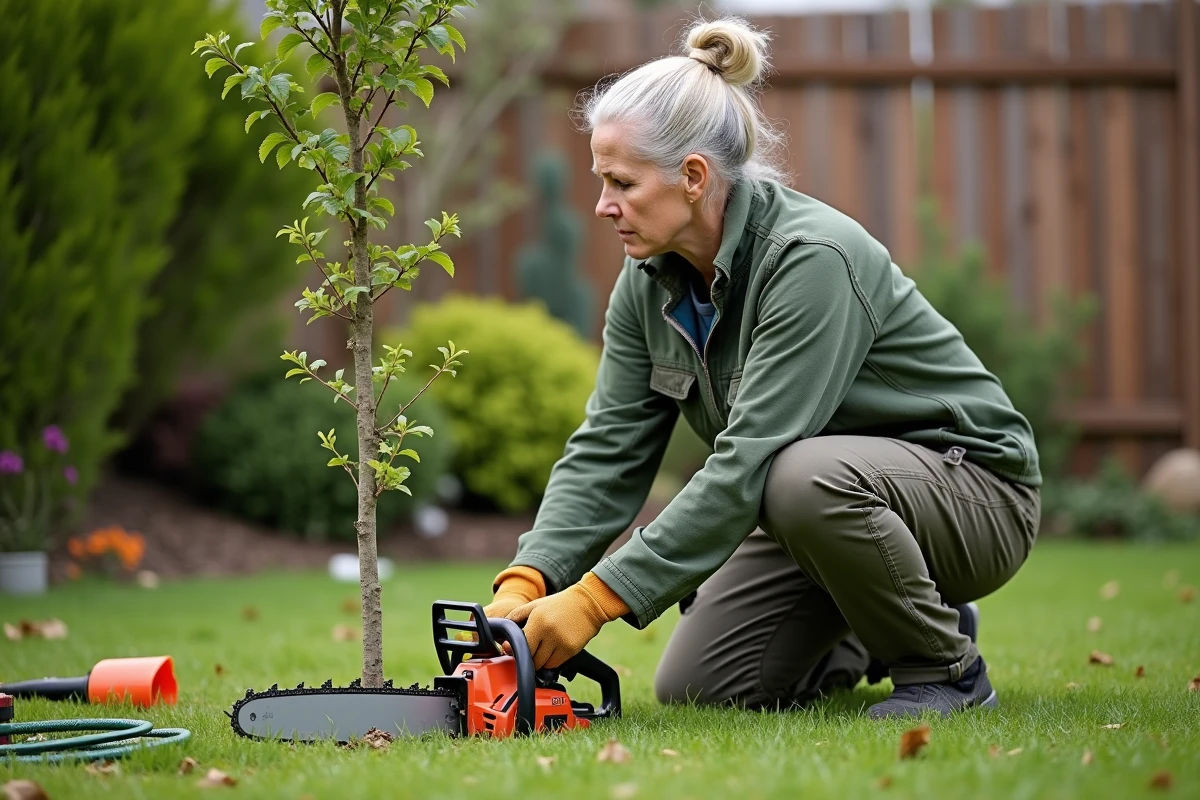
A poorly suited tool increases the risk of accidents and reduces the efficiency of pruning work. Some chainsaw models boast impressive performance on paper but turn out to be unsuitable for regular use or specific needs.
The variety of options, power levels, and safety devices makes selection complex, even for experienced users. Failing to check a single essential criterion can turn a simple operation into a tedious, even dangerous, task. Choosing the right equipment relies on a series of technical and practical parameters that should not be overlooked.
Why choosing the right pruner makes all the difference for your garden
Opting for the right pruner is not just about finding a practical tool. This choice impacts the health of each tree, the safety of the person working, and the success of all the care given to the garden. The pruner quickly becomes indispensable for working on any type of plant, whether it be fruit trees, ornamental species, or border plantings. Mastering this choice influences the precision of the cut, future regrowth, and upcoming flowering. Too much power, and the wood suffers; not enough, and each pass becomes laborious, not to mention the accumulated fatigue.
Adjusting the pruner to the garden profile and the type of branches allows for a clean, precise action that promotes regeneration and vitality of the plant. Regular maintenance, with well-chosen equipment, extends the life of the tree, limits the appearance of diseases, and maintains safety in the area, whether it is a private or public space. On the scale of the garden, the difference is striking: dense foliage, easier maintenance, trees in great shape season after season.
To refine your selection, it may be useful to consult specialized resources such as https://www.elagueuse-warrior.com, which offers an overview of models, their uses, and recent innovations. You can also find comparisons suitable for both domestic maintenance and professional requirements. Cutting height, power, ergonomics, or frequency of use: every criterion counts. A relevant selection is always built on a true understanding of the gardener’s needs, the specifics of the terrain, and the nature of the trees involved.
Gas, electric, or battery pruner: which one truly meets your needs?
The diversity of pruners leads each user to question their habits, expectations, and the configuration of their trees. There are three main categories on the market: gas models, electric, and battery versions. Each meets distinct needs. Here are the main advantages and limitations of each technology:
- Gas-powered pruners remain the reference for demanding work: large orchards, wooded parks, thick branches. The gas chainsaw ensures power and autonomy, without relying on an electrical outlet, but it has a higher weight and requires regular maintenance.
- Electric pruners are better suited for small gardens and occasional interventions. Their lightness and reduced noise level are appealing. However, you need to have a nearby outlet. For soft wood or light trimming, their ease of use makes a difference.
- The battery pruner stands out for its mobility and flexibility. Suitable for medium-sized gardens, it frees you from the cord while offering adequate power for branches of moderate diameter. Advances in lithium-ion batteries now allow for long sessions without loss of efficiency.
The pole pruner, available in each of these motorizations, simplifies work at height and secures the operator, without the need for a ladder. Some multifunction brush cutters can also accommodate a pole pruner attachment, providing valuable versatility for regular maintenance. Always choose a tool suited to the frequency of interventions, the terrain configuration, and the diversity of the tree heritage.

Expert tips for effective and safe pruning
Safety should remain the priority from start to finish of the pruning process. Wearing appropriate equipment, sturdy gloves, protective glasses, a helmet, and cut-resistant clothing reduces risks and protects against the unexpected. Keep your workspace clear, stable, and free from distractions and improvisations.
From a technical standpoint, it is recommended to check the chain tension before each use. A poorly adjusted or insufficiently lubricated chain increases the risk of incidents and compromises cutting quality. Most recent models are equipped with an automatic lubrication system: this device ensures consistent operation, limits wear, and preserves performance over time.
Always remember to adjust the machine’s power and the length of the guide bar to the diameter of the branches to be cut. For larger diameters, prioritize a robust and stable blade; for precise cuts, choose a lightweight, easy-to-handle pruner. Ergonomics also plays a major role: a well-balanced tool reduces fatigue and improves precision, especially during long working sessions.
Finally, regular maintenance remains the best guarantee of durability. Clean the device after each job, sharpen the chain, and monitor the condition of moving parts. This discipline extends the life of the tool, ensures a clean cut, and respects the structure of both the tree and the garden.
In a garden where every action counts, a carefully chosen pruner quickly becomes an ally, invisibly present in every season. A well-pruned tree today promises vigorous foliage, safe pathways, and a landscape that endures through the years without yielding to ease.