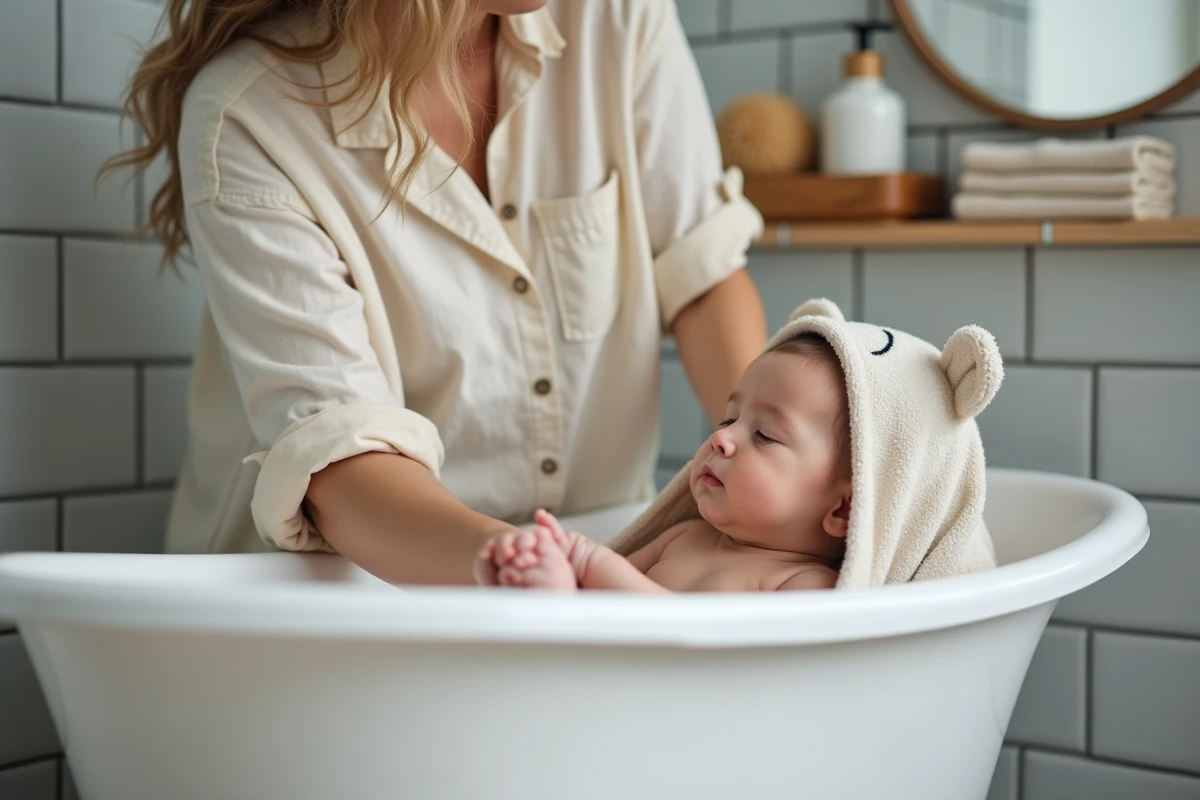
The bath tires the infant well beyond the simple relaxing effect attributed to it by most parenting guides. The central mechanism is thermoregulation: the baby’s body, immersed in water with a temperature different from its core temperature, mobilizes a significant amount of energy to maintain its thermal balance. This metabolic cost, rarely detailed, explains why a child can come out of the bath significantly more exhausted than when they entered.
Infant Thermoregulation and the Metabolic Cost of Bathing
The thermoregulatory system of the infant is immature. The body surface area-to-weight ratio is much higher than in adults, which accelerates thermal exchanges with the environment. From the moment of immersion, the baby’s body must continuously adjust its internal temperature.
If the water is slightly too hot, the body attempts to dissipate heat through peripheral vasodilation. If it is too cool, it triggers mechanisms for thermal conservation (vasoconstriction, increased basal metabolism). In both cases, the energy expenditure related to thermoregulation is significant for an organism weighing just a few kilos with limited glycogen reserves.
We observe that this physiological work translates into real fatigue, sometimes confused with simple calmness. The difference is notable: a calmed baby falls asleep peacefully, while a baby exhausted from thermoregulatory effort may become irritable before sinking into restless sleep.
To explore the mechanisms that explain baby fatigue on the Mômes et Merveilles site, several of these physiological parameters are detailed precisely.
Bath Water Temperature: The Variable That Changes Everything for Baby
The water temperature is the most determining parameter in the level of post-bath fatigue. Water that is too hot causes rapid vasodilation, an increased heart rate, and sweating that the infant struggles to compensate for. Water that is too cool forces the metabolism to produce more heat.
The difference between the water temperature and the baby’s body temperature determines the effort exerted. The greater this difference, the higher the caloric expenditure. We recommend checking the temperature with a bath thermometer rather than with the elbow, an imprecise method that leaves enough margin for error to unnecessarily tire the child.
Room Ambient Temperature
The often-overlooked factor is the temperature of the bathroom itself. A baby coming out of lukewarm water into a cool room experiences a moderate but real thermal shock. Their body must then exert a second thermoregulatory effort, this time out of the water, at the very moment they are wet and evaporation cools their skin.
This double effort (immersion then exit) accumulates energy expenditure. That’s why an infant may seem perfectly calm in the bath but collapse from fatigue just a few minutes after getting out.
Bathing and Respiratory Pathologies: An Increased Risk of Fatigue in Infants
For babies with respiratory conditions (bronchiolitis, chronic lung disease), the question of bathing takes on an additional dimension. Any elevation in body temperature increases respiratory work and oxygen demand. A bath that is too hot at the end of the day, when the child is already tired, can increase oxygen consumption and cause disproportionate exhaustion.
Mpedia reminds us that in diseases that consume energy and require oxygen, temperature management is a direct lever to limit excessive fatigue. We observe that parents of children who are fragile in terms of respiration often underestimate the impact of bathing on their infant’s overall fatigue.
In these situations, reducing bath duration, slightly lowering the water temperature, and ensuring that the room is warm enough are simple adjustments that decrease the metabolic load imposed on the child.
Post-Bath Fatigue or Sign of Discomfort: Knowing How to Differentiate the Two
Fatigue after bathing is normal to a certain extent. But excessive fatigue may signal thermal discomfort or the onset of fever rather than just a simple effect of the evening ritual. The distinction is clinically relevant.
Here are the signs that indicate discomfort rather than normal physiological fatigue:
- Marked irritability and inconsolable crying in the minutes following the bath, while the child was calm during immersion
- Persistent skin mottling or abnormally red skin after drying, indicating significant vascular effort
- Refusal of breastfeeding or bottle-feeding post-bath, a sign of exhaustion that exceeds simple drowsiness
- Unstable body temperature measured after the bath (slight hyperthermia or hypothermia), indicating that thermoregulation has failed to stabilize the body
These markers should prompt a review of the bathing conditions rather than the elimination of the ritual. The bath remains a moment of care and beneficial contact, provided that the thermal parameters are appropriate.
The Cool Bath for a Tired or Feverish Child: A Practice Abandoned
Recent pediatric recommendations have ended the use of cool baths to invigorate a feverish child. This practice is deemed ineffective and a source of significant discomfort. A cool bath does not sustainably lower fever and imposes additional thermoregulatory stress on the infant that worsens their fatigue.
Optimizing the Bath to Preserve the Baby’s Energy
The goal is not to eliminate the evening bath but to control the variables so that energy expenditure remains moderate. A few targeted adjustments allow for the benefits of the ritual to be maintained without exhausting the child:
- Use a bath thermometer consistently and aim for water close to the infant’s body temperature
- Preheat the bathroom to reduce the thermal differential at the moment of exit
- Limit immersion duration, especially for low-weight infants or those with respiratory fragility
- Dry the baby immediately with a pre-warmed towel to cut short heat loss through evaporation
These actions are not about unnecessary comfort. They directly reduce the thermoregulatory load and allow the baby to enjoy the bath as a moment of relaxation rather than a metabolic ordeal. The fatigue that follows a well-calibrated bath is gentle and conducive to falling asleep, very different from the exhaustion caused by a poorly set bath.