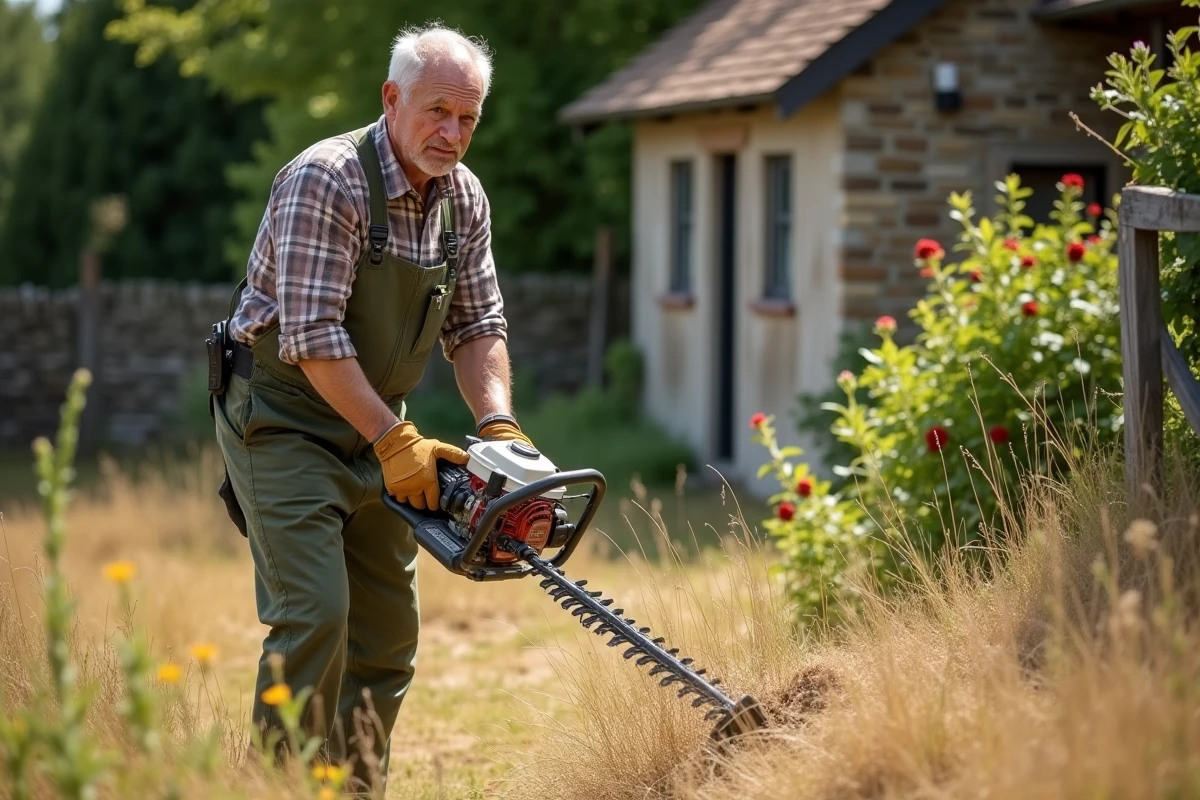
Your land has areas that the mower cannot reach: slopes, fence posts, flowerbed edges, brambles that gain ground every spring. The brush cutter is the tool that takes over in these situations. However, it is essential to choose the right model, as an unsuitable machine tires the user and damages the vegetation instead of controlling it.
Gas engine or battery: what the regulations change for your brush cutter
Before comparing technical specifications, first look at the context in which you will use your machine. Several French municipalities are tightening restrictions on noisy gas-powered equipment, with decrees limiting the allowed operating hours. In co-ownership or in densely populated urban areas, a gas brush cutter may become unusable for half the day.
The national low-carbon strategy and local climate-air-energy plans are also pushing communities and professional landscapers towards battery-powered machines. Manufacturers’ catalogs are following this trend. Stihl, Husqvarna, Echo, or Makita now offer complete “battery pro” ranges with high-capacity backpack batteries and fast charging systems.
For an individual, the consequence is direct: if you live in a housing estate with close neighbors, the sound comfort gained from a battery brush cutter is not a luxury. It is sometimes a regulatory constraint. You will find a wide selection of suitable models on debroussailleuse-warrior.com, which covers both gas and battery ranges.
The gas engine remains relevant in a specific case: large plots far from any electrical outlet, where the battery’s autonomy is insufficient for a complete work session. If your garden is less than a few hundred square meters, the battery meets the majority of needs.

Nylon line, blade or disc: adapting the cutting tool to the vegetation
You may have noticed that some grasses resist the nylon line and wrap around the cutting head? This is a sign that the tool is not suitable for the existing vegetation. The choice of cutting system is as important as the choice of engine.
Nylon line for grass and finishing
The nylon line is suitable for soft grass and finishing work around flowerbeds, along walls, or between slabs. It comes in various diameters. The thicker the line, the more it resists wear against tough stems. For regular maintenance of edges, a standard round section line is sufficient.
Blades and discs for brambles and underbrush
As soon as the vegetation exceeds the stage of tall grass (brambles, young shrub shoots, dense ferns), the nylon line reaches its limits. A three or four-tooth blade cuts through these woody stems effortlessly. The bramble disc is the only effective tool on land that has been fallow for several months.
Check before purchasing that the brush cutter model accepts both systems (line head and blade). Entry-level models are sometimes limited to nylon line, which reduces their versatility in the long term.
- Round nylon line: soft grass, mowing finishes, lawn edges. Little wear on the machine.
- Square or serrated nylon line: thicker grasses, resilient weeds. More aggressive cutting than a round line.
- Three-tooth blade: brambles, thick nettles, young shrub regrowth. Requires a more powerful engine.
- Grass or underbrush disc: established fallow land, woody stems, seasonal cleaning of abandoned areas.
Weight, harness, and vibrations: comfort that changes work duration
A criterion that product sheets often relegate to the bottom of the page, yet makes all the difference after twenty minutes of use: the weight of the brush cutter determines the actual working duration. A machine that is too heavy for your build turns garden maintenance into a physical chore.
Battery brush cutters are often lighter than gas models with equivalent power, but the weight of the battery can offset this advantage. The point to check is the overall balance of the machine, not just the number on the label.
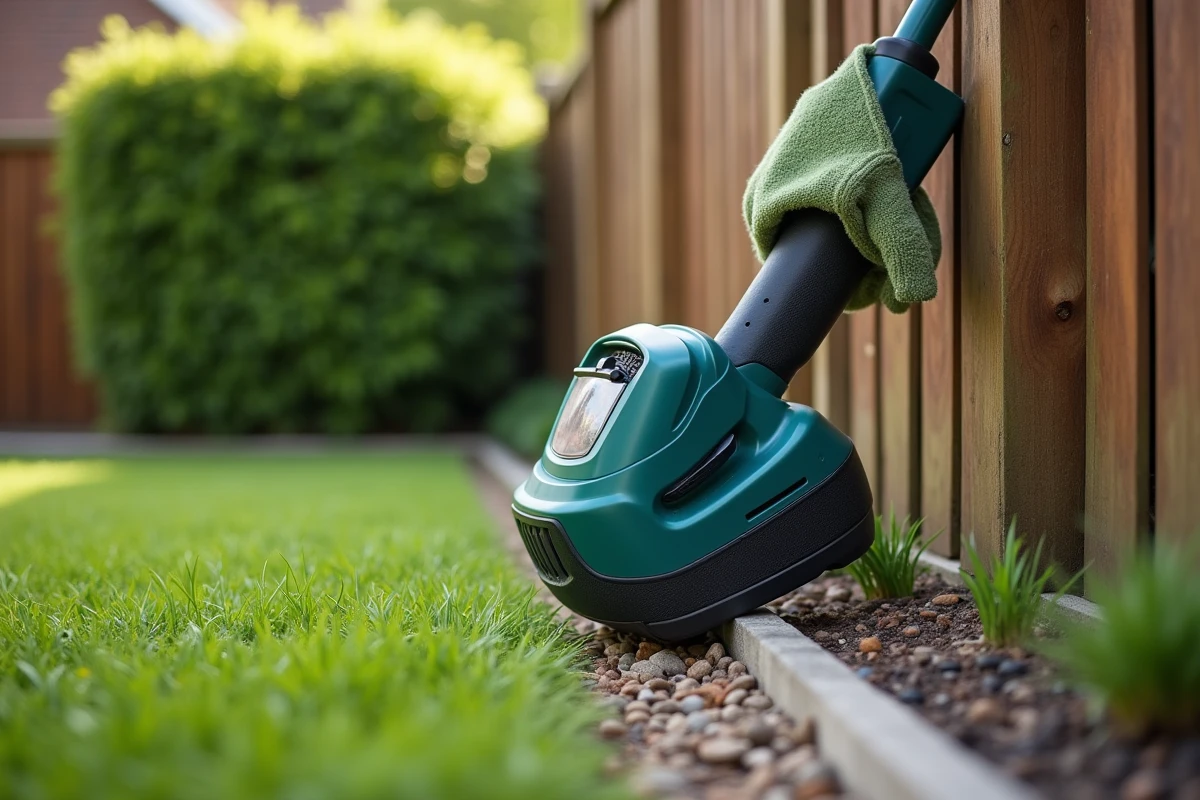
The harness makes a difference on large plots
For a small garden, a D-handle and a simple shoulder strap are sufficient. On a larger or sloped area, a “double strap” harness distributes the weight across both shoulders and the hips. A good harness reduces fatigue of the carrying arm by half during long sessions.
Vibrations, a comfort factor often overlooked
Gas engines transmit more vibrations to the handle than battery engines. During occasional use, the difference goes unnoticed. During sessions longer than an hour, vibrations fatigue the hands and forearms. Models equipped with anti-vibration systems (silent blocks, decoupled handles) are worth the extra cost if you regularly use a brush cutter.
Power of the brush cutter: do not oversize for a standard garden
Why would choosing an overly powerful machine be a problem? Because excessive power means higher weight, greater fuel or battery consumption, and decreased user comfort.
A medium-sized garden with grass and a few brambles does not require a professional engine. Models designed for individuals adequately cover this type of maintenance. Professional power is justified for intensive clearing, steep terrains, or sessions lasting several hours a day.
- Edge maintenance and finishing: a lightweight battery model with a line head is sufficient.
- Tall grasses and occasional brambles: a versatile model accepting both line and blade, gas or battery depending on noise constraints.
- Dense underbrush, sloped terrain, frequent use: a double strap harness model, with an underbrush disc and sufficient power to maintain the cutting speed in thick vegetation.
Regular garden maintenance requires a tool suited to the reality of the terrain, not the most powerful machine in the catalog. A well-chosen model, with the right cutting tool and a comfortable harness, transforms a tedious task into a quick and controlled job.