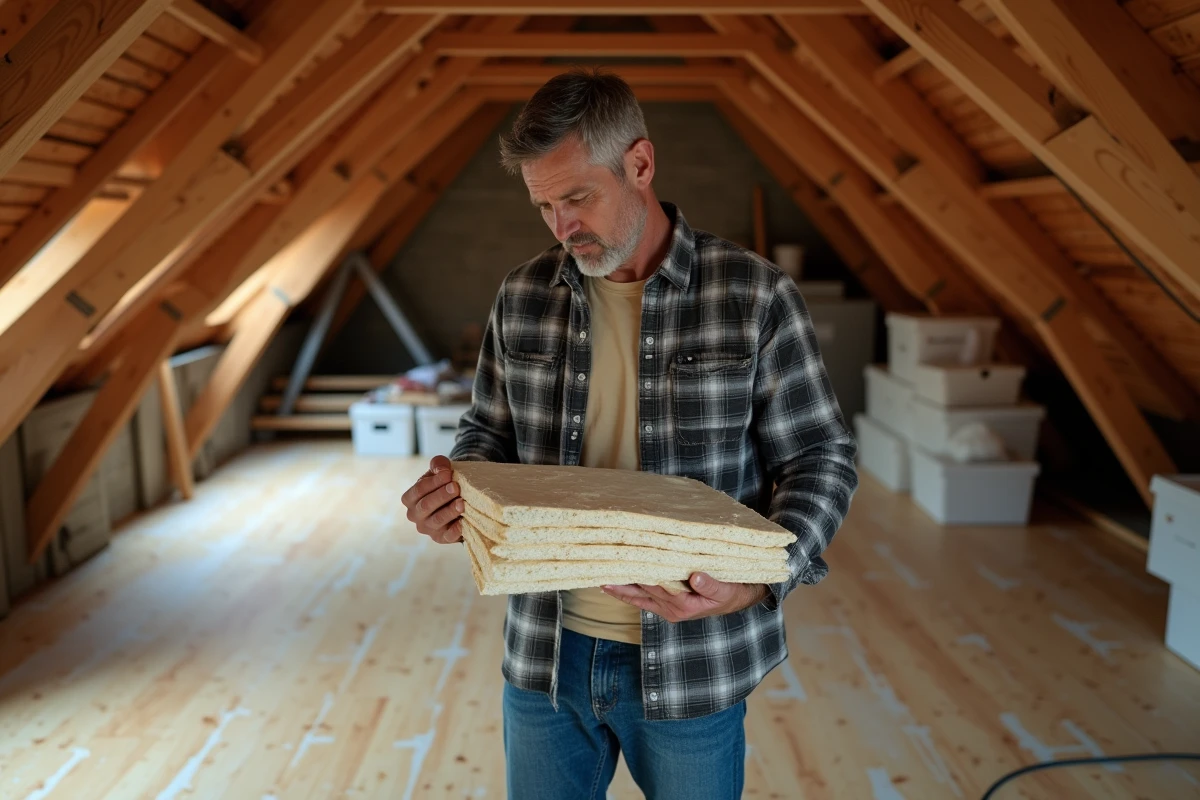
No table shows it, but fiberglass insulation is ahead for attic insulation in France. However, cellulose wadding is gradually making its mark, driven by its eco-friendly reputation and the demand for less polluting solutions. On paper, some natural insulators even outperform the classics in retaining heat or facing heatwaves. Yet, regulations and the dynamics of public aid close the door to several of them. In practice, the promise of effectiveness sometimes clashes with reality: humidity, scorching summers… and performance crumbles far from technical data sheets.
Why properly insulating your attic changes everything for your comfort and savings
Attic insulation is no detail. It is the number one escape point for calories in winter: up to 30% of the heat from a poorly insulated house evaporates through the roof, according to the Agency for Ecological Transition. Closing this gap, whether your attic is lost or converted, is betting on a temperate interior all year round. No more chills when the mercury drops, nor suffocation under the roofs in summer. This thermal comfort is quickly felt, without icy walls or unexpected heat spikes.
The impact is then reflected in expenses. An attic insulation project can reduce heating bills by 20 to 30% depending on the housing configuration. This slowdown in energy consumption becomes even more appealing with public aid such as MaPrimeRénov’, the Energy Bonus, the Eco-PTZ, or the reduced VAT of 5.5%. Some local authorities even add their own boost. It remains to meet the required thermal resistance level: 7 m²·K/W for lost attics, 6 for converted attics. Another imperative: hire a certified RGE professional, essential to secure these financial supports.
One last point deserves attention: thermal bridges. A sloppy installation, an insufficient thickness, or the omission of a vapor barrier can lead to performance collapse. Methods are evolving: blowing, panels, crossed installation… each configuration has its solution. To delve deeper into the issue, learn more at idylle-habitat.fr summarizes criteria and materials to compare before you start.
What criteria to prioritize when choosing insulation suited to your needs?
To select truly effective attic insulation, you must first target thermal resistance (R). This figure, expressed in m²·K/W, reflects the insulator’s ability to block heat transfer. Aim for a value greater than 7 for lost attics, 6 for converted attics: the higher the R, the more comfort is established, and the less energy escapes.
Thermal conductivity (lambda) also weighs in the balance. The lower this lambda, the more insulating the material proves to be, in both winter and summer. But performance is not limited to thickness or numbers: the amount of material must be adjusted to the frame and the nature of the chosen product.
Several other elements come into play, as follows:
- Moisture resistance: some mineral wools are sensitive to humidity variations and require a vapor barrier to prevent mold and deterioration.
- Fire resistance: not all materials react the same way to a flame outbreak.
- The lifespan announced by the manufacturer and the price per square meter.
- Compatibility with various financial aids.
Installation by a certified RGE professional is essential to access programs like MaPrimeRénov’, the Energy Bonus, or the Eco-PTZ. This label guarantees not only compliant installation but also the peace of a secure site, and the assurance of not losing the benefit of subsidies.
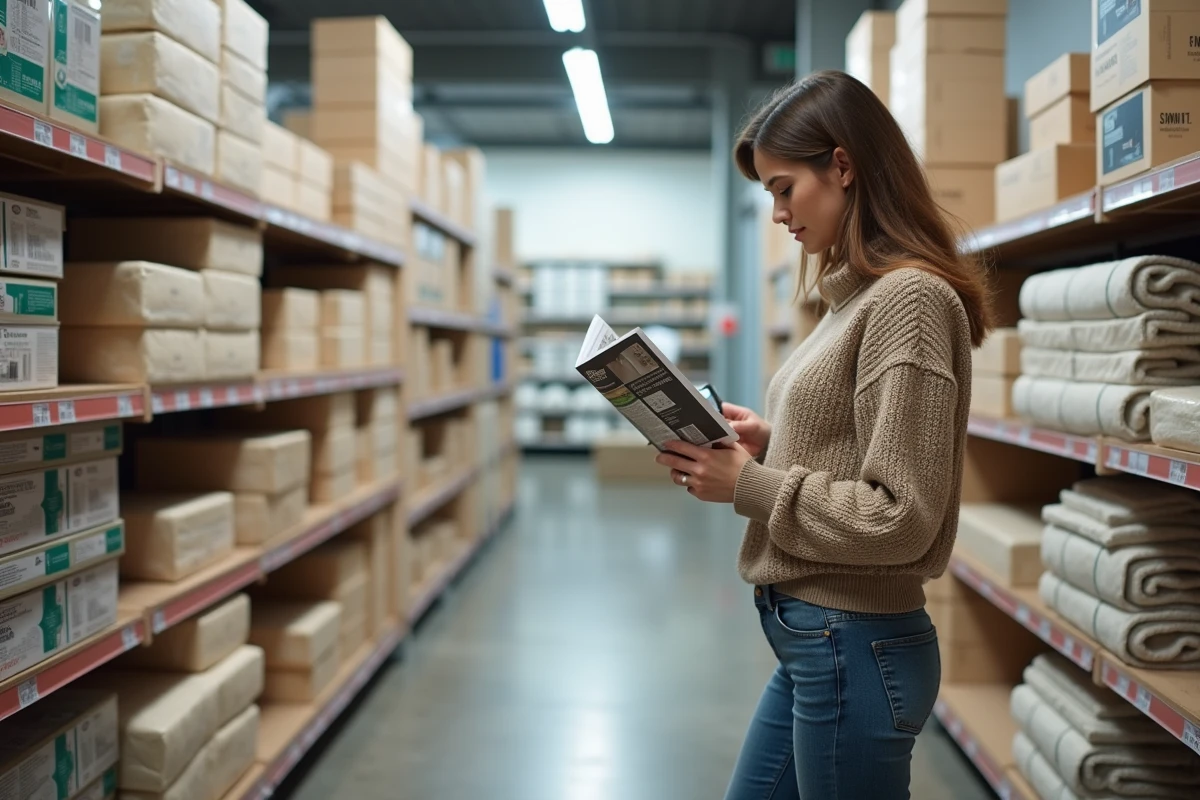
Overview of insulation materials: advantages, limitations, and practical installation tips
The range of materials for insulating attics is vast. It’s better to compare their strengths, prices, and precautions to take during installation to sort through them. Fiberglass stands out for its competitive price (3 to 17 €/m²), its ease of fitting everywhere, and its good fire resistance. Blown for lost attics, in rolls for converted spaces: its versatility hits the mark. However, it is sensitive to humidity and must therefore be protected by a vapor barrier, or it risks losing its qualities.
Rock wool competes in thermal performance (0.033 to 0.045 W/m·K) and stands out for its superior fire resistance. But it is also fragile against humidity. As for cellulose wadding, it is increasingly appealing: made from recycling, it offers interesting thermal and acoustic insulation, resists humidity better, but requires fire treatment to be safe over time.
For those looking to go further ecologically, hemp, flax, or wood insulation offers a real advantage in summer comfort and appreciated longevity. However, these natural insulators tend to have higher prices and sometimes increased sensitivity to fire or humidity.
Finally, synthetic insulators (polystyrene, polyurethane) offer moisture resistance and high thermal performance, but they require special attention for fire safety. The installation method, whether blowing, panels, rolls, or spreading, should be chosen based on the attic configuration and the material.
To ensure long-term effectiveness, check air tightness, respect the recommended thickness, and don’t forget the vapor barrier if the material requires it. Well-thought-out insulation promises a winter without drafts and a cool summer, along with the satisfaction of having chosen the most suitable solution for your home and lifestyle.