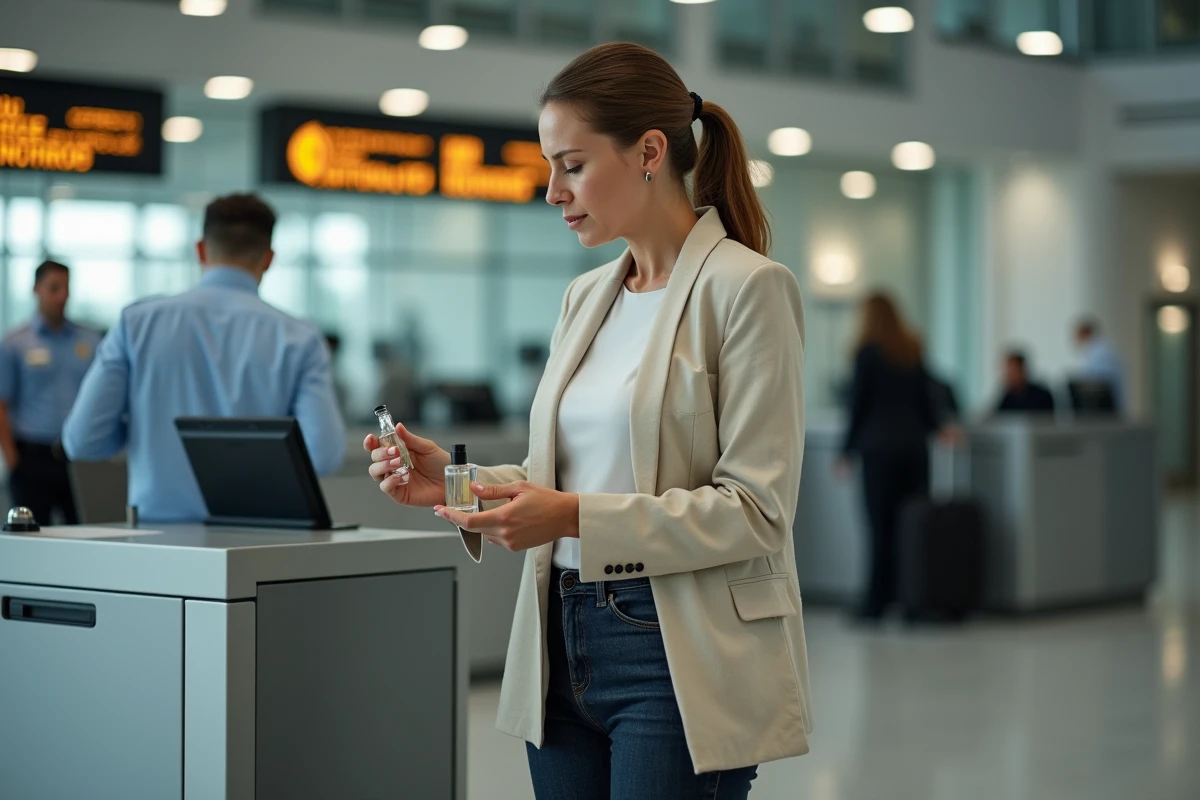
Within the European Union, perfume is not subject to the same quantitative thresholds as tobacco or alcohol. Bringing perfume from Spain to France falls under a distinct legal framework, where the concept of personal use replaces fixed quotas. This absence of an official numerical ceiling creates a gray area that customs officers exploit during checks, and frequent travelers must understand to avoid any commercial reclassification.
Intra-EU perfume allowance: why no official quota exists
Directive 2008/118/EC harmonizes excise duties on alcohol and tobacco among member states, but perfumes are not subject to the excise duty regime. No European text sets a maximum number of bottles or an overall volume allowed between two countries of the Union.
The French customs apply a qualitative criterion: strictly personal use. In practice, we observe that agents assess the commercial nature of a transport by cross-referencing several indicators, including quantity, packaging (blister-packed bottles, identical lots), and consistency with the traveler’s profile.
To delve deeper into the applicable framework and its subtleties, you can consult Voyagoo’s advice, which details the thresholds and declaration obligations.
The case of Andorra deserves a separate mention. The Canary Islands and Andorra, although geographically close to mainland Spain, are not part of the customs territory of the European Union. The allowance there is significantly more restrictive, with a ceiling of 75 g of pure perfume without immediate taxation. Confusing a purchase made in Andorra la Vielle with a purchase in Barcelona can trigger unexpected taxation when crossing the French border.
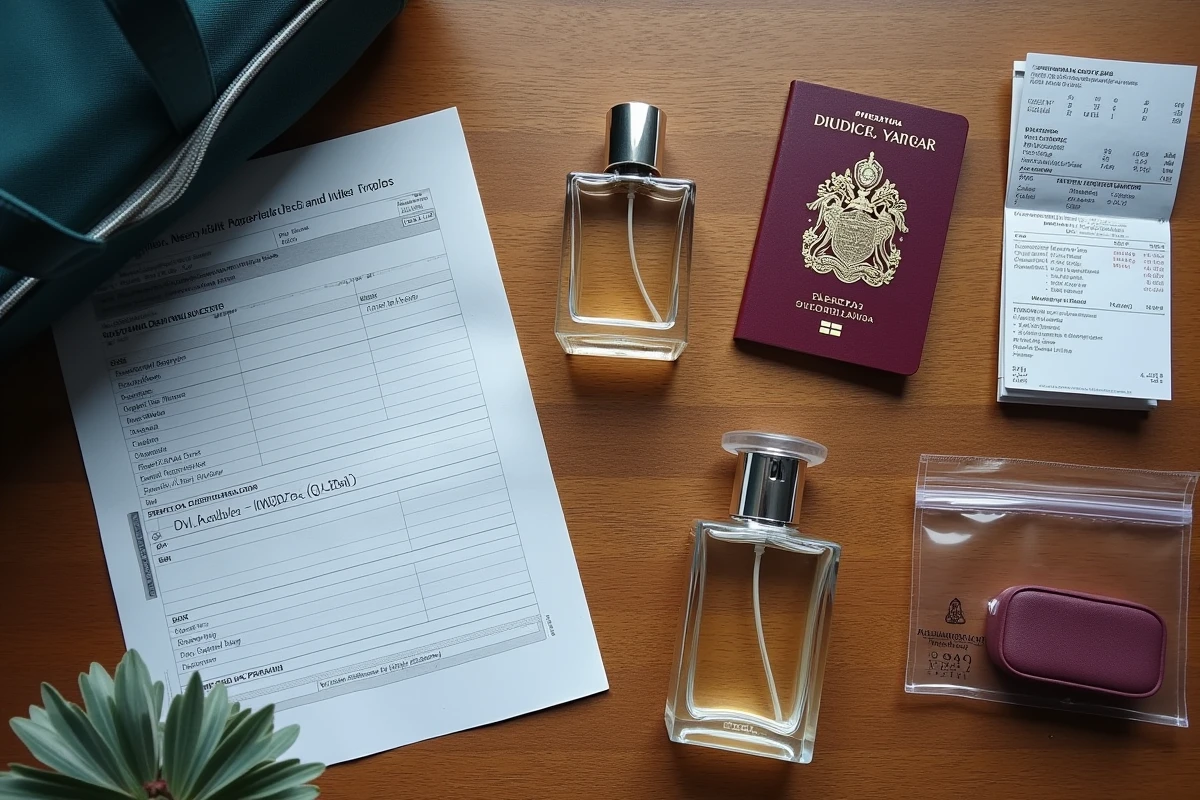
Criteria for French customs officers’ assessment of perfume from Spain
The absence of a numerical threshold does not mean the absence of control. Customs officers have a wide margin of discretion, and the burden of proof falls on the traveler in case of doubt.
Here are the elements that customs officers cross-reference during a check:
- The number of identical bottles in the same luggage, suggesting a purchase intended for resale rather than personal use
- The presence of duty-free receipts or multiple invoices issued on the same day from different retailers
- The frequency of the same traveler’s border crossings, which can be checked in customs databases, especially on the Spain-France road routes
- The unopened original packaging in large quantities, which reinforces the commercial hypothesis
If the officer reclassifies the transport as a commercial import, French VAT and customs duties become payable on all affected products. A fine may be added in case of failure to declare.
Counterfeits: a distinct customs risk
Since 2025, French authorities have intensified seizures of counterfeit perfumes coming from Spain, due to the proximity of illegal production areas. Transporting a counterfeit bottle exposes one to confiscation and prosecution, even for a single item. The traveler’s good faith does not exempt from seizure.
We recommend systematically keeping proof of purchase from official stores or authorized duty-free shops and checking for the presence of the barcode and lot number on each bottle.
Strategies for frequent travelers to combine allowances and Spanish duty-free
Regular travelers on the Spain-France route adopt specific practices to remain within the legal framework while optimizing their purchases.
The first is to spread purchases over several trips rather than concentrating a high volume on a single crossing. A traveler crossing the border every month with two or three varied bottles does not trigger the same signals as a single crossing with ten identical references.
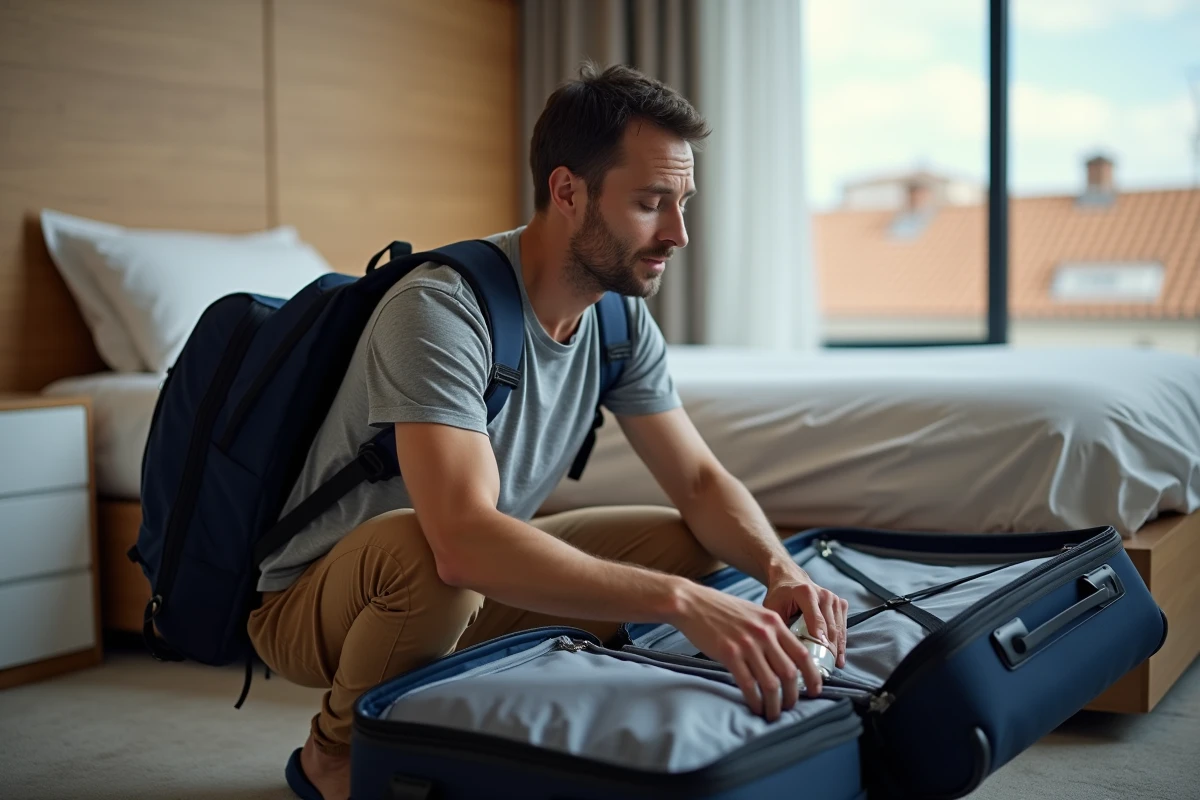
The second concerns the distinction between airport duty-free purchases and purchases from regular perfumeries. Products bought in duty-free during intra-EU flights benefit from a specific regime: the sealed bag with proof of purchase serves as a recognized justification by French customs. Keeping this bag intact until reaching the destination avoids any ambiguity during a check.
Avoiding double taxation
The classic trap occurs when a traveler combines duty-free purchases (already exempted at source) with purchases from regular Spanish perfumeries (Spanish VAT paid). In case of a check, the two categories of purchases are examined separately.
For purchases from regular stores, Spanish VAT has already been paid. The risk of double taxation only exists if the officer reclassifies the transport as a commercial import, in which case French VAT applies without deducting the Spanish VAT already paid. The procedure for refunding Spanish VAT (export tax refund) is not accessible to EU residents purchasing in another member state.
Practically, we recommend physically separating duty-free purchases (sealed bag) from purchases in perfumeries in luggage and being able to present a receipt for each bottle.
Perfume from Spain by plane: cabin volume restrictions
Customs regulations should not be confused with air safety restrictions. In the cabin, each liquid container is limited to 100 ml, grouped in a resealable transparent plastic bag with a maximum of one liter. This rule applies regardless of the value or nature of the perfume.
In the hold, no unit volume limitation applies to perfumes, but airlines impose restrictions on flammable materials (perfumes contain ethyl alcohol). Most airlines tolerate standard commercial bottles without special declaration.
A traveler who buys a set of several bottles in duty-free after security control can take them in the cabin without unit volume restrictions, provided they keep the sealed bag provided by the store.
The quantity of perfume from Spain allowed at the French border remains more a question of context than of numbers. Keeping proof of purchase, varying references, and separating categories of purchases in luggage is sufficient to pass through customs without difficulty.